The first conversation identifies how washing after FUE appears in the patient’s photos, history, and goals.
Recovery planning
Recovery should be explained before the procedure is scheduled.
A clear recovery plan helps patients understand visible healing, graft protection, washing, sleeping, work, exercise, hats, shedding, and follow-up timing.

The plan considers how sleeping after hair transplant affects design, density, timing, and follow-up.
The recommendation stays conservative when shock loss timeline changes what is realistic.
Recovery is part of the treatment plan.
Patients often focus on the day of treatment, but the first days and weeks after a procedure matter. Instructions should be individualized and clear enough that patients know what is normal, what to avoid, and when to contact the clinic.
Recovery support visuals
Recovery guidance should feel practical and calm, with clear expectations around washing, sleeping, activity, visible healing, and follow-up.
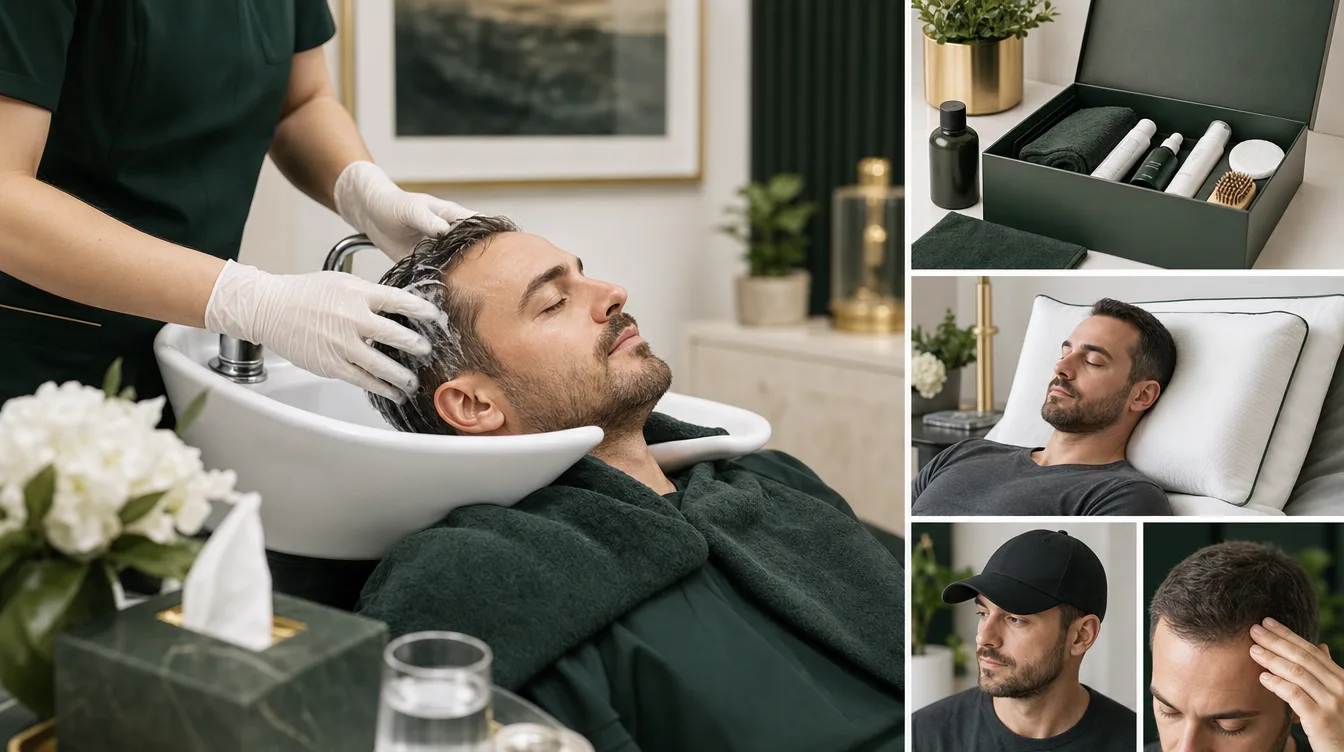

First days
The early recovery period focuses on protecting grafts, reducing unnecessary friction, and following clinic-specific washing and sleeping instructions.
Sleeping position guidance
Careful washing instructions
Avoiding friction or scratching
Return to normal routines
Work, exercise, hats, travel, and social plans depend on swelling, visible healing, procedure type, and clinician instructions.
Work planning
Exercise timing discussion
Hat and sun exposure guidance
Growth timeline
Shedding can be part of the process. Visible growth is gradual, and milestones vary by patient, area treated, and biology.
Shock loss discussion
Gradual growth expectations
Follow-up checkpoints
Next step
Plan a consultation around hair transplant recovery
Bring the details that matter for hair transplant recovery and the clinic can help decide whether the next step is diagnosis, treatment planning, support therapy, or observation.
Common questions about hair transplant recovery
When can I wash my hair?
Follow the clinic’s instructions. Timing and technique can vary based on procedure type and healing.
Can I wear a hat?
This should be discussed with the clinic because pressure, friction, and timing matter.
When can I return to work?
Many patients plan around visible healing and comfort, but the answer depends on the procedure and job demands.