The first conversation identifies how follicular unit extraction appears in the patient’s photos, history, and goals.
Follicular Unit Extraction
FUE is a technique. The result depends on planning, restraint, and medical judgment.
Follicular Unit Extraction can restore coverage for suitable candidates, but the important work starts before extraction: diagnosis, donor management, hairline design, and realistic expectations.
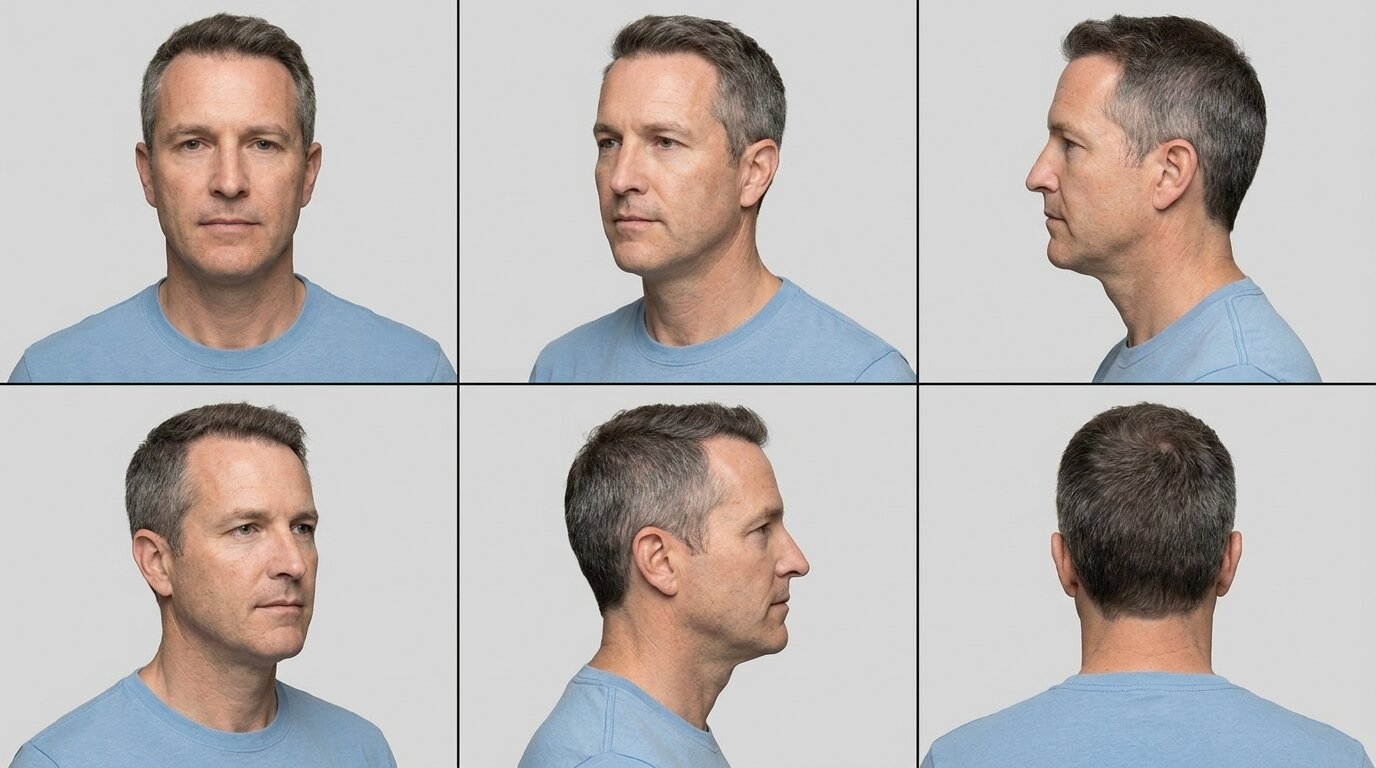
The plan considers how donor area management affects design, density, timing, and follow-up.
The recommendation stays conservative when graft placement design changes what is realistic.
What FUE actually means.
FUE removes individual follicular units from a donor area, usually the back and sides of the scalp, and places them into areas where coverage is needed. The method avoids a strip incision, but it still requires surgical planning, careful handling, and a design that fits the patient long term.
FUE technique visuals
FUE is easier to understand when donor planning, graft placement, and hairline design are shown as careful planning steps rather than simple promises.

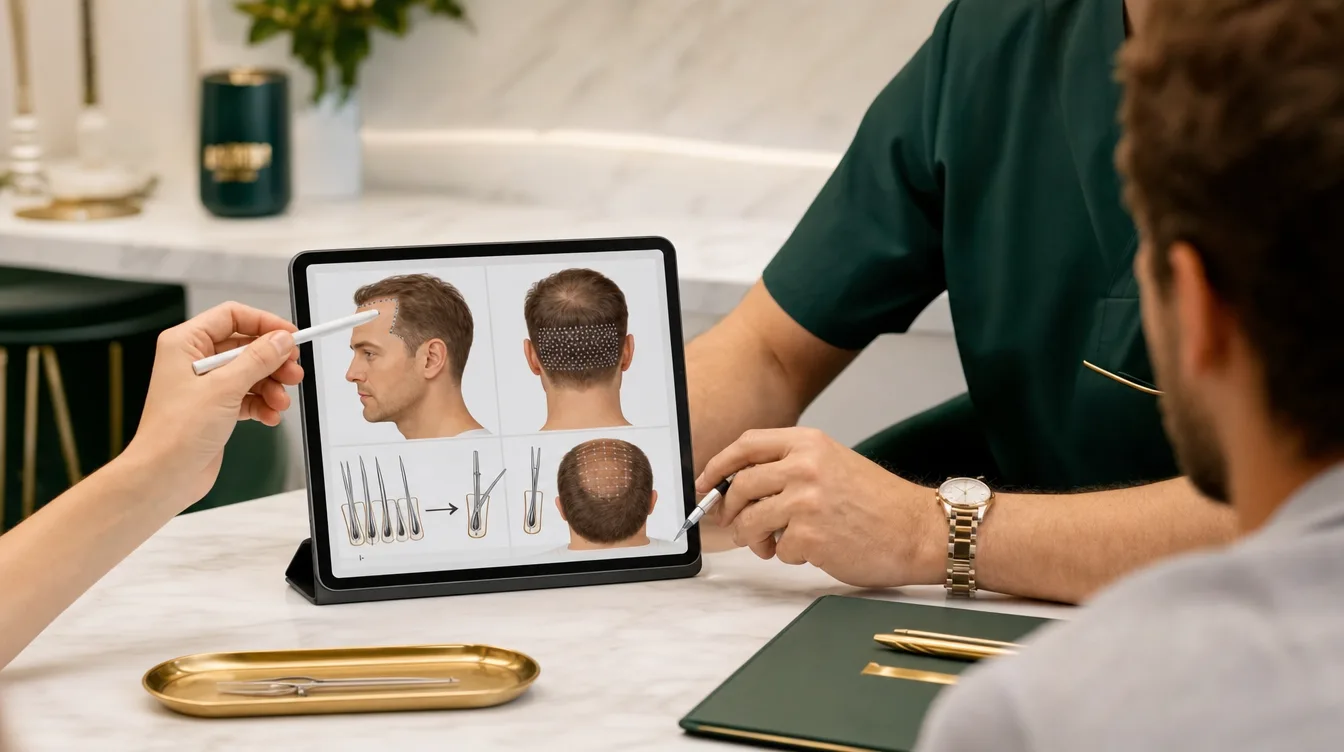
Donor-area assessment
The donor area is a finite resource. A responsible plan evaluates density, hair calibre, scalp condition, and whether future hair loss could create additional needs.
Density and follicle calibre
Safe extraction pattern
Long-term preservation
Hairline and recipient-site design
Natural results depend on angle, direction, irregularity, density distribution, and a hairline that suits the face rather than chasing an unrealistic shape.
Age-appropriate hairline
Temple transition planning
Recipient-site direction
Candidacy and alternatives
Some patients are better served by medication review, PRP, exosome support, monitoring, or waiting until the pattern is clearer.
Medical history review
Pattern stability
Supportive therapy options
Next step
Plan a consultation around FUE hair transplant technique
Bring the details that matter for FUE hair transplant technique and the clinic can help decide whether the next step is diagnosis, treatment planning, support therapy, or observation.
Common questions about FUE hair transplant technique
What is the difference between FUE and a package transplant?
FUE describes a method of harvesting grafts. A good result still requires individual assessment, design, surgical judgment, and follow-up.
Can FUE be used for beard or eyebrows?
FUE principles can be adapted for facial hair and eyebrows, but the design, direction, density, and expectations are different from scalp restoration.
How long does growth take?
Growth is gradual. Shedding and delayed visible growth can occur, and timelines vary. Your consultation should cover realistic milestones.