The first conversation identifies how FUE eligibility appears in the patient’s photos, history, and goals.
Candidacy first
The right candidate is not just someone who wants more hair.
Good candidacy depends on anatomy, donor supply, hair loss pattern, health history, expectations, and whether the chosen procedure fits the patient’s long-term needs.
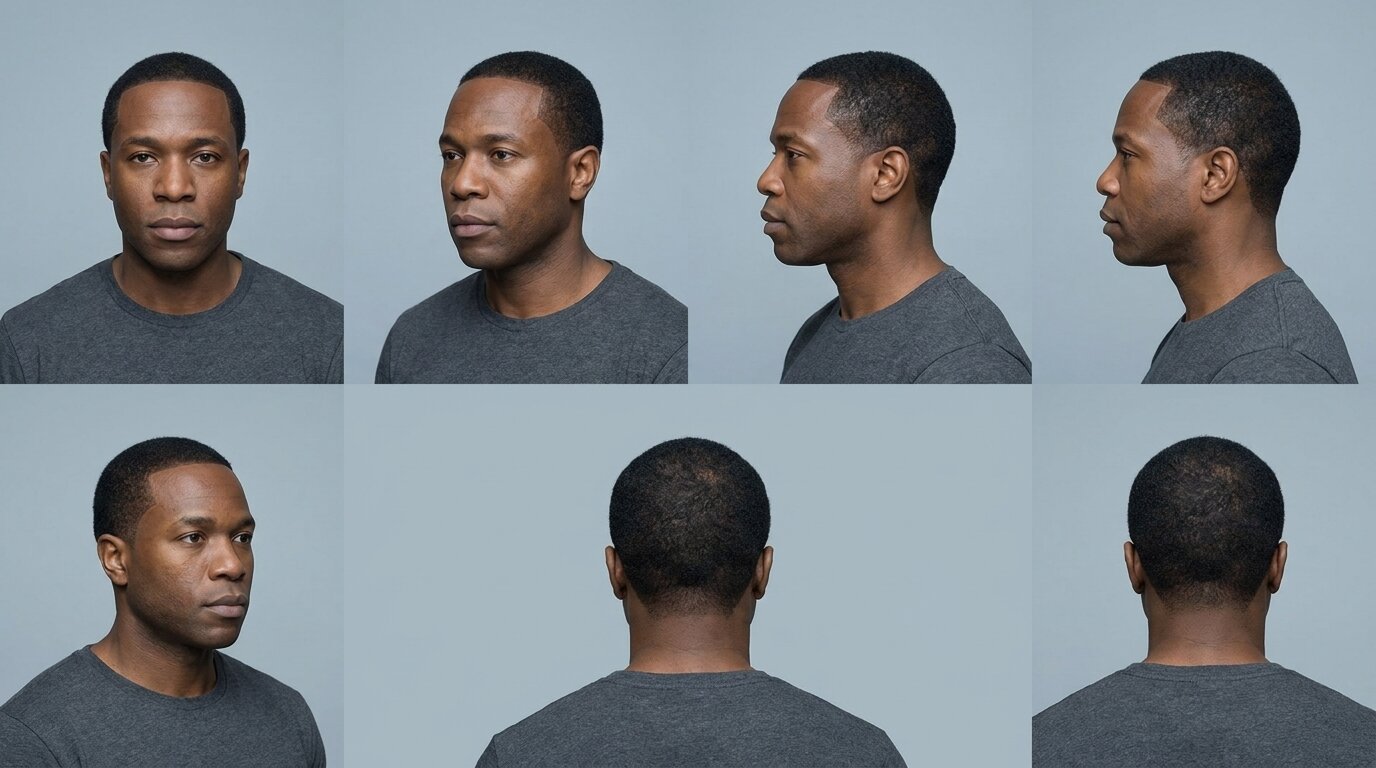
The plan considers how donor reserve affects design, density, timing, and follow-up.
The recommendation stays conservative when stable hair loss pattern changes what is realistic.
Why screening protects the patient and the result.
A transplant changes a finite donor resource. The consultation should identify who is ready, who needs supportive care first, and who may be better served by monitoring or a different plan.
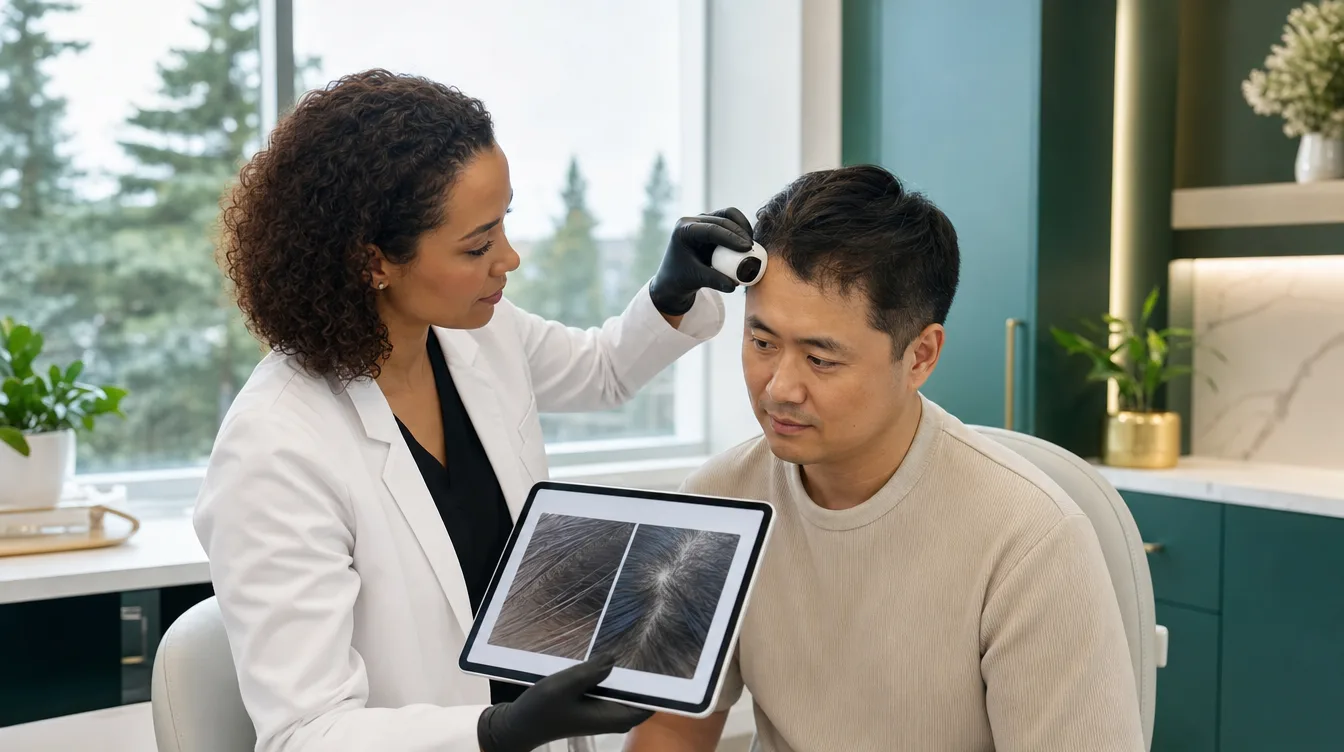
Candidacy assessment visuals
Candidacy is a clinical judgment that looks at pattern, donor area, scalp health, goals, history, and whether surgery is the right next step.

Scalp FUE candidacy
FUE candidates generally need adequate donor supply, a pattern that can be planned, realistic density goals, and an understanding of maintenance.
Donor capacity
Pattern stability
Hairline and coverage priorities
Beard transplant candidacy
Beard candidates need suitable donor hair, realistic density goals, and skin or scar conditions that can support careful placement.
Patch pattern and desired design
Scar or skin assessment
Maintenance expectations
Eyebrow transplant candidacy
Eyebrow candidates require especially careful design and donor-hair selection because direction, trimming, and density are highly visible.
Brow shape and symmetry
Donor hair compatibility
Grooming commitment
Next step
Plan a consultation around hair transplant candidates
Bring the details that matter for hair transplant candidates and the clinic can help decide whether the next step is diagnosis, treatment planning, support therapy, or observation.
Common questions about hair transplant candidates
Can young patients be candidates?
Sometimes, but early hair loss needs careful long-term planning. Age alone is not the only factor.
Can medical hair loss affect candidacy?
Yes. Some causes require diagnosis, stabilization, or medical management before a transplant is appropriate.
What if I am not a candidate now?
The plan may include monitoring, supportive treatments, medication review, or reassessment later.