The first conversation identifies how patchy beard growth appears in the patient’s photos, history, and goals.
Facial hair restoration
Beard transplant planning for patchy growth, scar gaps, and natural facial-hair density.
A beard transplant requires more than adding follicles. Direction, angle, density, facial shape, donor supply, and healing expectations all need to be planned carefully.
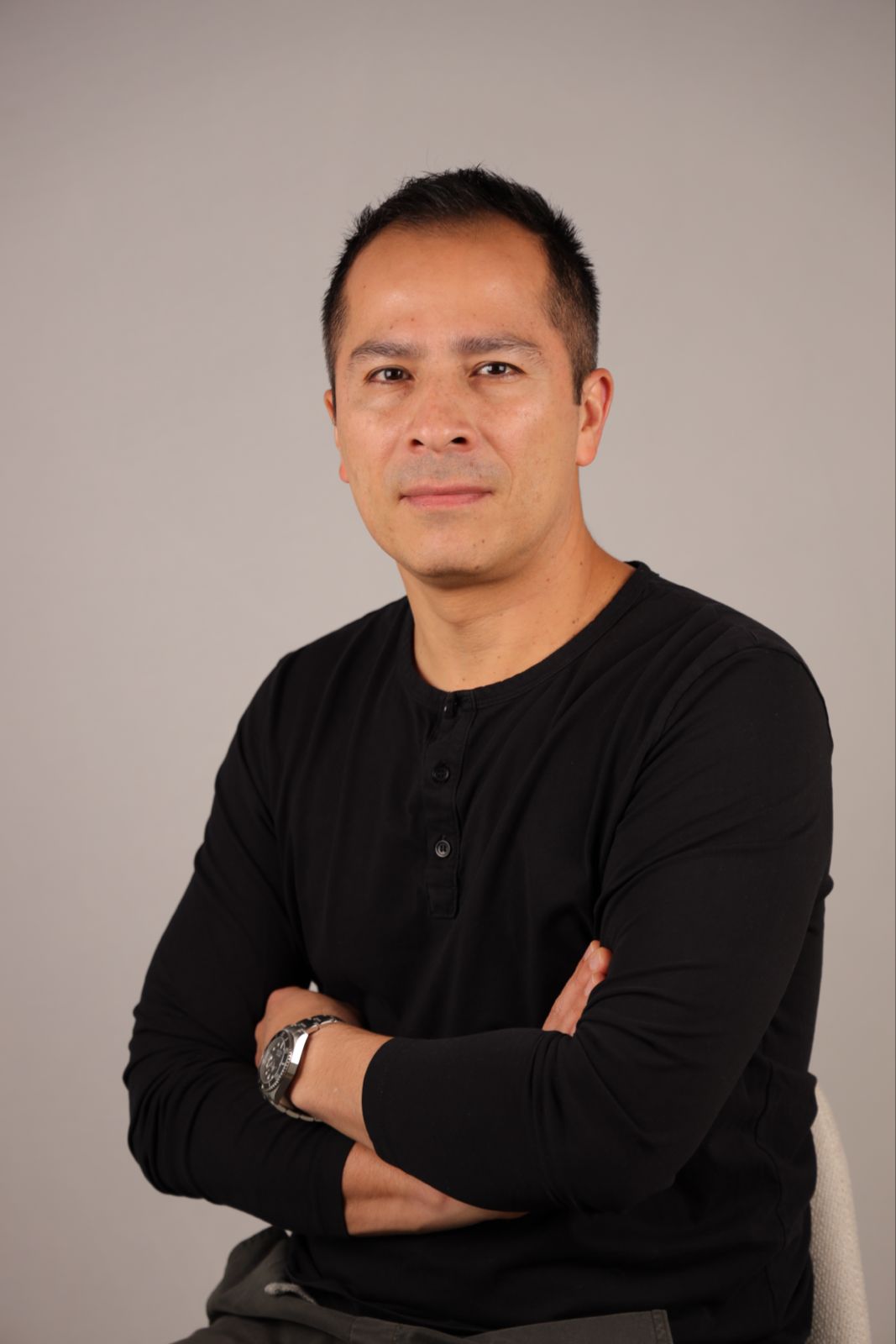
The plan considers how facial hair density affects design, density, timing, and follow-up.
The recommendation stays conservative when scar gap planning changes what is realistic.
A beard transplant should be designed for the face, not just the beard line.
Patients may consider beard transplantation for naturally sparse growth, patchy areas, scars, asymmetry, or density goals. A consultation reviews whether donor hair can match the intended look and whether the plan is realistic for the face and skin.
Beard design visuals
Beard transplant planning depends on facial structure, patch pattern, donor supply, scar gaps, and the natural direction of facial-hair growth.
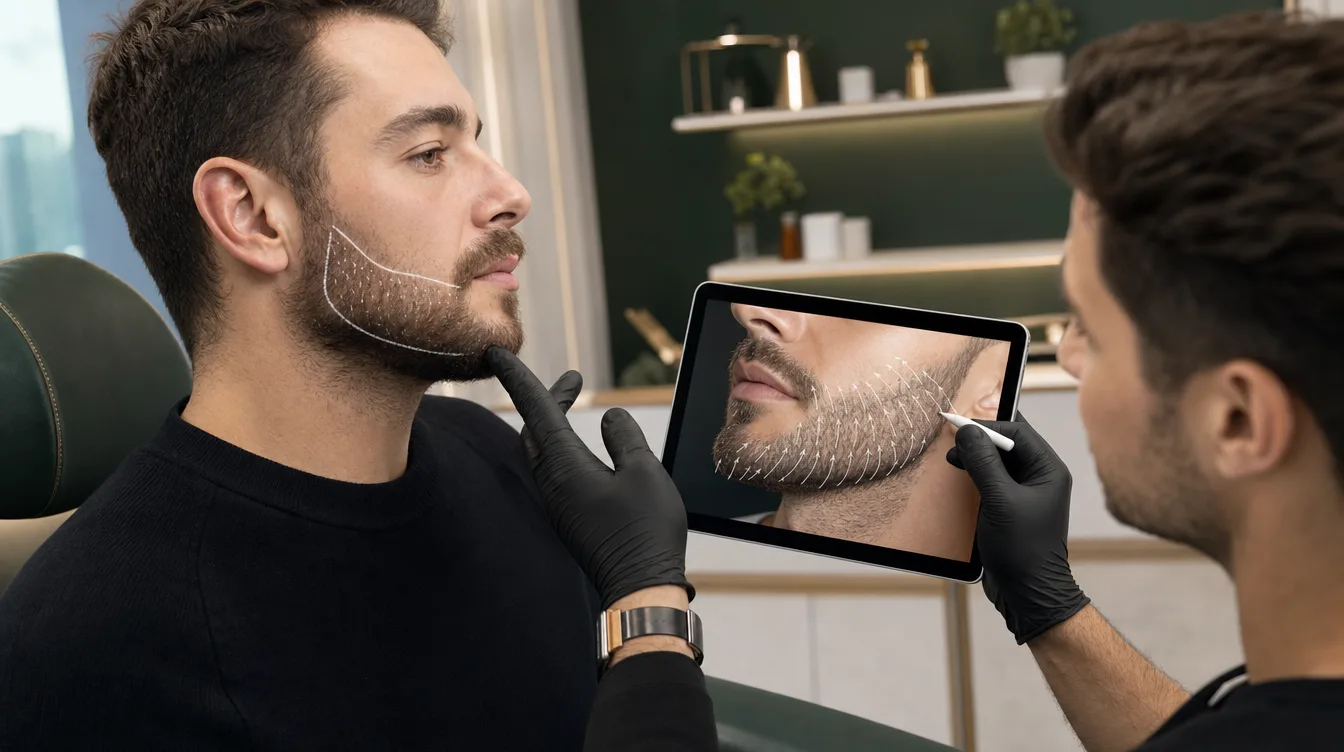
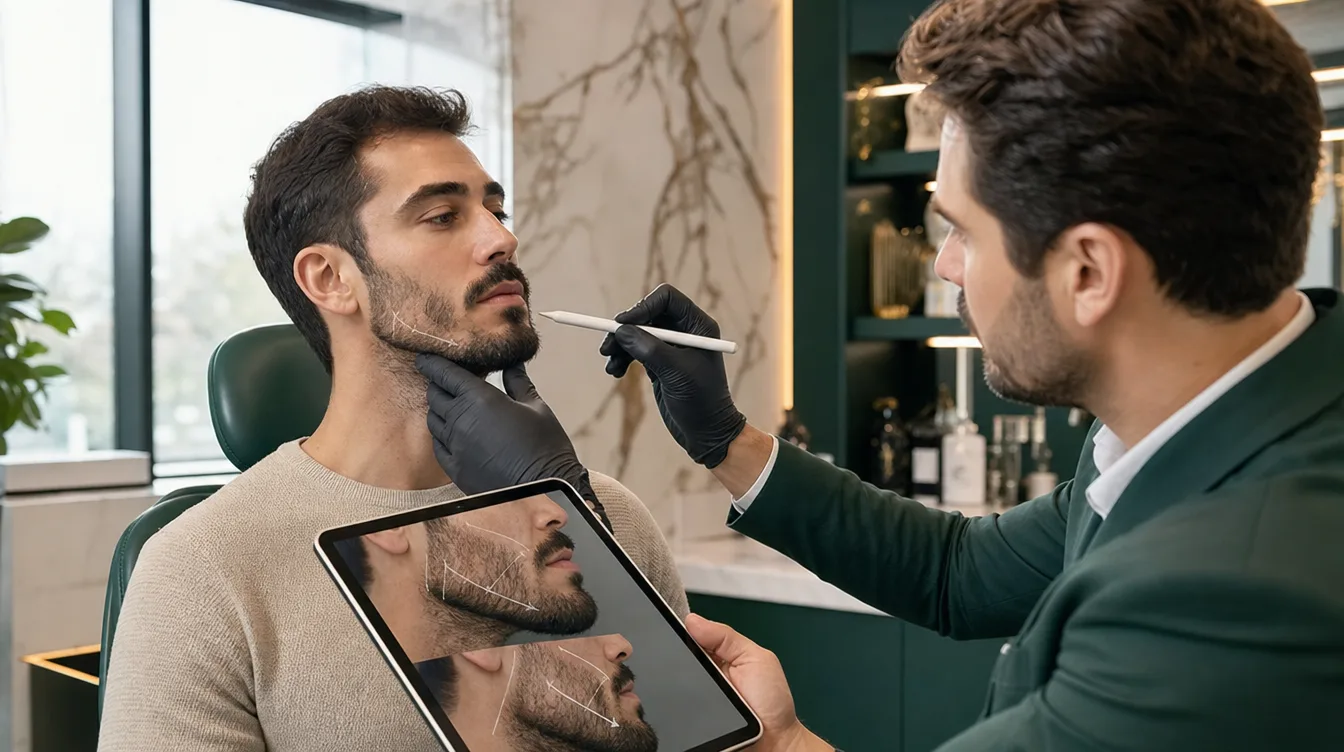
What beard planning reviews
The design considers cheek line, jawline, moustache connection, density zones, scar tissue, and how the transplanted hair may need to be maintained.
Patchy beard or sparse cheeks
Scar gaps and irregular growth
Moustache, goatee, and jawline continuity
Why direction matters
Facial hair grows at visible angles. Placement must account for direction, spacing, and density so the result does not look artificial.
Natural growth direction
Conservative density planning
Facial proportion and symmetry
Candidacy factors
Not every patient is a strong candidate. Donor supply, skin quality, hair characteristics, scarring, and expectations determine whether treatment is appropriate.
Donor-area suitability
Skin and scar assessment
Realistic maintenance discussion
Next step
Plan a consultation around beard transplant in Toronto and Montreal
Bring the details that matter for beard transplant in Toronto and Montreal and the clinic can help decide whether the next step is diagnosis, treatment planning, support therapy, or observation.
Common questions about beard transplant in Toronto and Montreal
Can beard transplantation fill scars?
It may help some scar gaps, but scar tissue must be assessed because blood supply, texture, and healing can affect planning and expectations.
Will beard hair look natural?
Natural appearance depends on hair selection, angle, density, and whether the design suits the face. A consultation is required to judge feasibility.
Is the donor hair from the scalp?
Scalp donor hair is commonly considered, but suitability depends on hair characteristics and the desired beard pattern.